
Mobile App Development Company: Custom iOS, Android, and Cross-Platform Apps
Native, Cross-Platform, and Hybrid Mobile App Development – MVPs, Full Products, AI-Powered Apps, and Enterprise Solutions
Your customers are on their phones. The businesses that reach them with well-built, well-designed mobile apps build stronger engagement, higher retention, and more direct revenue channels than those relying solely on websites or third-party platforms. At A2Z Dev Center, we are a mobile app development company that builds custom iOS and Android apps from the ground up, designed around your specific business goals, your users needs, and your long-term product roadmap.
Our mobile app development services cover the full development lifecycle: product discovery and requirements definition, UI/UX design, native and cross-platform development, backend API development, AI and ML feature integration, third-party integrations, testing, App Store and Google Play deployment, and post-launch support. Whether you are a startup building your first MVP mobile app to validate a product idea, an established business adding a mobile channel to an existing web platform, or an enterprise replacing a legacy application with a modern AI-powered mobile solution, our team has the technical depth to deliver.
We build on the platforms and frameworks that best match your project requirements. For native performance and full platform capability, we develop in Swift and SwiftUI for iOS and Kotlin for Android. For cross-platform projects where a single codebase needs to serve both iOS and Android without sacrificing performance, we work in React Native and Flutter. Every decision about technology stack, architecture, and development approach is made based on your specific project needs, not a default preference for whichever framework our team finds easiest.
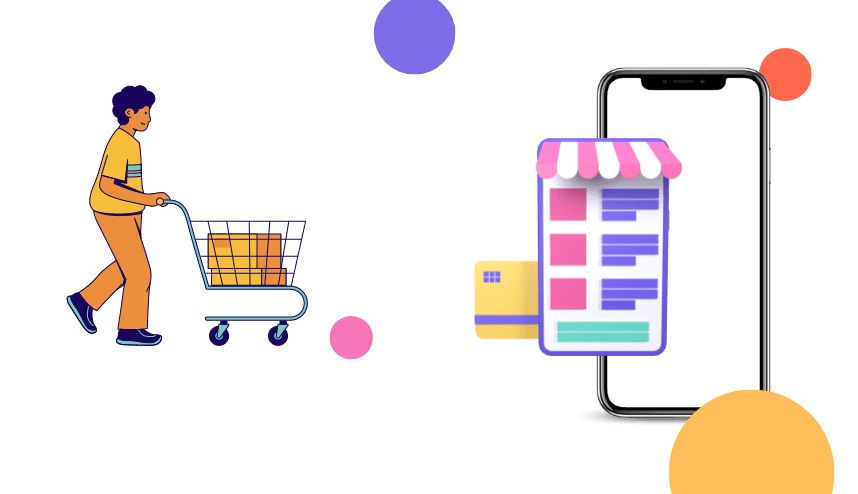
Our Mobile App Development Services
A2Z Dev Center delivers end-to-end custom mobile application development services across every major platform, category, and industry.
iOS App Development
We build native iOS applications in Swift and SwiftUI for iPhone and iPad, taking full advantage of Apple platform capabilities including Face ID, Apple Pay, HealthKit, ARKit, CoreML, and the latest iOS APIs. Our iOS apps are built to meet Apple App Store review guidelines and human interface design standards, delivering the polished, responsive experience iOS users expect. We handle everything from initial App Store Connect setup through submission, review, and post-launch updates.

Android App Development
We build native Android applications in Kotlin and Java for the full range of Android devices from budget phones to flagship tablets, covering the fragmented Android hardware ecosystem with responsive layouts, performance optimization, and thorough device testing. Our Android development includes Google Play Store setup and deployment, adaptive icon design, push notification implementation, and integration with Google platform services including Maps, Firebase, and the Google Play Billing Library.

Cross-Platform App Development
For projects that need to serve both iOS and Android from a single codebase without sacrificing performance or native feel, we build in React Native and Flutter. Cross-platform development reduces build time and long-term maintenance cost significantly when the project is suited to this approach. We are honest about when native development is the better choice and when cross-platform delivers everything the project needs, and we make that recommendation transparently before committing to a technology path.
Custom Enterprise Mobile Apps
We build enterprise mobile applications for internal business operations, field service management, B2B customer-facing tools, logistics and inventory management, healthcare and telehealth platforms, and mobile banking and fintech applications. Enterprise apps require additional considerations around security, device management, offline capability, and enterprise system integration that our team has extensive experience handling correctly.

UI/UX Design for Mobile
A technically well-built app with poor UX will not retain users. Our UI/UX design team works alongside our mobile developers from the beginning of every project, building wireframes, interactive prototypes, and final high-fidelity designs that follow platform conventions for iOS and Android while reflecting your brand identity. We conduct usability reviews and iterate on designs based on feedback before a single line of production code is written.
Backend API Development and Integration
Most mobile apps require a backend: user authentication, data storage, push notifications, payment processing, third-party API integrations, or real-time data sync. We build the backend infrastructure your app needs, whether that is a custom REST or GraphQL API, a Firebase or AWS-based serverless architecture, or integrations with existing systems via your current API layer. Our web app development capabilities mean we handle the full stack, not just the mobile client.
App Testing and Quality Assurance
Every app we deliver goes through structured QA covering functional testing across target devices, performance testing under realistic load conditions, security testing for common mobile vulnerabilities, and App Store and Google Play pre-submission compliance checks. We test on real devices, not just simulators, and we maintain a testing matrix that covers the most common device and OS combinations your users are likely to be running.
App Store Deployment and Post-Launch Support
We handle the full App Store and Google Play submission process including app metadata, screenshots, privacy policy requirements, and App Store Connect and Google Play Console configuration. After launch, we provide post-launch monitoring, crash reporting review, and ongoing update development as your app evolves and platform OS updates require maintenance work.
AI and Machine Learning Integration for Mobile Apps
AI-powered features have shifted from a differentiator to a baseline user expectation in many app categories. We integrate AI and ML capabilities into mobile applications at the feature level, using pre-trained APIs and on-device models appropriate to the use case and budget. Common integrations include: OpenAI API and GPT-based conversational interfaces and content generation, TensorFlow Lite and Apple Core ML for on-device inference (image recognition, classification, predictive models), Firebase ML Kit for smart reply, language identification, and text recognition, personalization engines that adapt content and recommendations to individual user behavior, and AI-powered search.
Innovative App Building Solution
If you search for new mobile application development or wish to enhance the existing mobile application, then you can contact our mobile app development team online. We are here to shape the project strategy with the business goals, market reality, and technical capacity in mind. You can make contact with our professional team and get customized yet affordable mobile application development services.
Our company successfully provides a wide range of best mobile application development services especially the custom mobile application development on the Android and iOS platforms.
Mobile App Development Technologies We Work With
We choose the right technology for each project rather than defaulting to a single framework. Here is the full range of mobile app development technologies our team works with.
Native iOS
Swift, SwiftUI, Objective-C, Xcode, UIKit, Combine, Core Data, HealthKit, ARKit, CoreML, MapKit
Native Android
Kotlin, Java, Android Studio, Jetpack Compose, Room, Retrofit, Firebase SDK, Google Maps SDK, Hilt
Cross-Platform
React Native, Flutter, Dart, Expo, React Navigation
Backend and APIs
Node.js, Laravel, REST API, GraphQL, Firebase, AWS Amplify, Supabase, PostgreSQL, MongoDB
Authentication and Security
OAuth 2.0, JWT, biometric authentication (Face ID, Touch ID, Fingerprint), SSL/TLS, data encryption at rest
Push Notifications
Firebase Cloud Messaging (FCM), Apple Push Notification Service (APNs), OneSignal
Payments
Stripe, Apple Pay, Google Pay, in-app purchases (StoreKit, Google Play Billing)
Analytics and Monitoring
Firebase Analytics, Crashlytics, Mixpanel, Sentry, App Store Connect Analytics, Google Play Console
AI and Machine Learning
OpenAI API (GPT-4o, GPT-4 Turbo), TensorFlow Lite, Apple Core ML, Firebase ML Kit, Google ML Kit, PyTorch Mobile, Hugging Face Transformers
App Store Optimization (ASO)
App Store Connect, Google Play Console, keyword metadata optimization, screenshot and preview video production, rating and review management strategy
Wearables and IoT
Apple WatchOS, watchOS complications, HealthKit, Apple HomeKit, Android Wear OS, IoT device BLE and Wi-Fi integration via CoreBluetooth and Android Bluetooth API
How Our Mobile App Development Process Works
Our mobile application development process is designed to reduce surprises, keep projects on schedule, and deliver apps that perform well in production rather than just in demos.

Discovery and Requirements Definition
Before any design or development work begins, we spend time understanding exactly what you are building and why. That means discussing your target users, core features, platform requirements, integration needs, performance expectations, and business model. This stage produces a structured requirements document and a realistic project scope that forms the basis for the proposal and development plan.
UI/UX Design and Prototyping
Our design team builds wireframes and interactive prototypes before development starts. You review and approve the user flow, screen layouts, and interaction patterns at this stage, when changes are fast and inexpensive. Final high-fidelity designs are produced in Figma with assets prepared for developer handoff. This step is handled by our dedicated UI/UX design service team working in direct collaboration with the mobile developers.

Backend and API Development
For apps that require a backend, we build or integrate the API layer in parallel with or just ahead of mobile development. This includes database design, authentication systems, business logic, third-party integrations, and any real-time features like WebSocket connections or push notification infrastructure. Our Laravel development and web app development teams handle this work alongside the mobile team.

Mobile Development in Sprints
We develop in two-week sprints, delivering working builds at the end of each sprint for your review. You can test real functionality on your own device throughout the build rather than waiting until the end to see anything. Sprint-based development also gives you the ability to reprioritize features between sprints as you see the app taking shape.
Testing and QA
Before App Store or Google Play submission, every app goes through structured QA covering functional testing on real devices, edge case and error handling, performance under realistic conditions, security review, and platform compliance checks. We maintain a device testing matrix covering common iOS and Android device and OS version combinations.
App Store Submission and Launch
We manage the full App Store and Google Play submission process: app metadata, screenshots, privacy policy requirements, age rating questionnaires, and all technical compliance requirements. We have submitted many apps through both stores and know how to handle reviewer questions and respond to rejection notices quickly.
Why Choose A2Z Dev Center as Your Mobile App Development Partner
There are thousands of mobile app developers and development companies available. Here is what distinguishes A2Z Dev Center for businesses that want a reliable, technically strong development partner rather than the lowest-cost option.
Full-Stack Capability Under One Roof
A2Z Dev Center handles the full stack: mobile development, backend API development through our web app development team, and UI/UX design through our design service. A coordinated team that works together builds better integrated products than multiple separate vendors trying to stay in sync — and your project has a single point of accountability rather than three separate contracts with three separate escalation paths.
Honest Technology and Scope Recommendations
We will tell you when cross-platform development is the right choice for your project and when native development is worth the additional cost. We will tell you when your initial feature scope is too large for your budget and help you define an MVP that validates the core value before building everything. We will tell you when AI integration actually solves a user problem and when it is a feature that adds complexity without improving the experience. Our goal is to give you the best possible app for your investment, not to maximize billable development hours by defaulting to the most expensive technical recommendation.
MVP-First Approach That Reduces Risk
We specifically recommend MVP development for first-time app projects and new product lines because the market almost always teaches you something important about what users actually want versus what you planned to build. An MVP scoped around your single most critical product hypothesis, built in 10 to 16 weeks, and tested with real users costs a fraction of a full-featured build — and the feedback you receive before committing to the full development budget is worth far more than the savings alone. We build MVPs with production-quality code and maintainable architecture so the codebase grows cleanly as the product expands.
Sprint-Based Delivery With Regular Visibility
You receive a working build every two weeks throughout the project. You are never waiting until the end of a multi-month development cycle to see whether the app is what you expected. Feedback cycles during development are how we catch misalignments early, when they are still inexpensive corrections, rather than at the end of the project when they require expensive rework. Every sprint ends with a demo, a review of the next sprint plan, and the opportunity to reprioritize features based on what you have seen.
Real Device Testing Across a Broad Hardware Matrix
We test on a broad matrix of real iOS and Android physical devices throughout development, not only on simulators. Simulator testing catches many categories of bugs but consistently misses real-world performance issues on older or lower-spec hardware, rendering differences on specific screen sizes, touch responsiveness problems, camera and sensor behavior, and battery drain under realistic usage conditions. Before App Store or Google Play submission, every app has been validated on the specific device and OS version combinations that represent your actual user base.
Post-Launch Availability and Ongoing Maintenance
We do not disappear after launch. iOS and Android platform OS updates are released on Apple and Google schedules and frequently require app changes to maintain compatibility, retain App Store visibility, or meet updated platform requirements. We stay available to handle that maintenance. We also offer ongoing feature development retainers for clients whose apps continue to evolve after the initial launch. If your previous development company is no longer available and you need someone to take over maintenance of an existing app, we are experienced at onboarding into external codebases quickly.
Frequently Asked Questions
We are a professional Mobile App Development service provider. We give shape to your ideas and create custom web solutions.
How much does it cost to build a mobile app?
A simple MVP for a single platform typically starts at $15,000 to $40,000. A standard app with a custom backend for both iOS and Android typically ranges from $60,000 to $120,000. Complex apps in regulated categories (fintech, healthcare, on-demand logistics) with multiple user roles and real-time features typically range from $100,000 to $250,000 and above. These ranges depend on feature complexity, platform count, backend requirements, and the scope of integrations. We provide a detailed written cost estimate after a free discovery conversation where we scope your specific requirements accurately. We do not provide meaningful estimates without first understanding what is actually being built.
How long does it take to build a mobile app?
A well-scoped MVP for a single platform typically takes 10 to 16 weeks from design kickoff to App Store submission. A standard app for both iOS and Android with a custom backend typically takes 20 to 28 weeks. Complex apps with extensive integrations, multi-role functionality, and compliance requirements take 28 to 40 weeks or more. We provide a project timeline estimate as part of every written proposal after properly scoping the work. Aggressive timelines that compress proper discovery, design review, and testing phases produce lower-quality results — we build realistic schedules rather than tell clients what they want to hear on timeline.
Should I build an MVP first or build the full app?
For most first-time app projects, we recommend an MVP first. The reason is straightforward: the features you think your users need and the features they actually use are rarely identical, and finding this out after building a full-featured app is expensive. A focused MVP that tests your single most important product hypothesis — built in 10 to 16 weeks — costs a fraction of the full build and produces real user feedback that makes the full product substantially better. We build MVPs with production-quality code and maintainable architecture, so the MVP codebase grows cleanly into the full product rather than needing a rewrite. If you already have validated product-market fit from a web product or existing user research, a full build may be the appropriate starting point.
Can you integrate AI features into a mobile app?
Yes. We integrate AI and machine learning features into mobile apps using pre-trained APIs and on-device models appropriate to the use case. Common integrations include OpenAI API for conversational interfaces and content generation, Apple Core ML and TensorFlow Lite for on-device inference (image recognition, classification, recommendation), Firebase ML Kit for text recognition and smart reply, and personalization engines that adapt app content to individual user behavior. For most business use cases, integrating a well-chosen pre-trained API produces the AI capability needed at a fraction of the cost and timeline of building a custom model. We scope AI integration honestly: we recommend AI features when they solve a specific user problem better than a non-AI implementation, and we advise against adding AI for its own sake.
Should I build a native app or a cross-platform app?
Native apps (Swift for iOS, Kotlin for Android) give you the best performance, the deepest access to platform features, and the most polished platform-native feel. Cross-platform development (React Native or Flutter) serves both iOS and Android from a single codebase, which reduces development time and ongoing maintenance cost compared to maintaining two separate native apps. For most standard business apps, cross-platform delivers everything the project needs. For apps that require deep platform integration — advanced camera control, health sensors, AR, custom hardware interfaces — native development is often the better choice. We recommend the approach that best matches your project requirements and budget after understanding what you are building.
Can you build both the mobile app and the backend?
Yes. A2Z Dev Center handles the full stack. Our web app development team builds backend APIs, databases, authentication systems, and third-party integrations alongside the mobile development team. Having both teams in the same organization means faster coordination, no handoff delays between the mobile client and backend work, and a single point of contact for the entire project rather than two separate vendors whose contracts, timelines, and scope boundaries require constant alignment.
Do you handle App Store and Google Play submission?
Yes. We manage the complete submission process for both the Apple App Store and the Google Play Store, including app metadata, screenshots, preview videos, privacy policy requirements, age rating questionnaires, and all technical compliance requirements. Apple App Store review can take 1 to 3 days for standard submissions; Google Play review typically takes a few hours to 2 days. We handle reviewer feedback and resolve rejection notices efficiently, drawing on experience submitting many apps through both stores across multiple categories.
Do you work on apps that someone else originally built?
Yes. We take on maintenance and upgrade work for apps built by previous development teams or agencies. This includes OS compatibility updates when a client’s previous developer is no longer available, bug resolution, performance improvements, dependency upgrades, and ongoing feature development. We assess the existing codebase honestly before committing to a scope — if the existing code has architectural problems that affect the quality of work we can deliver, we tell you before starting rather than discovering it mid-engagement.
Do you provide ongoing support after the app launches?
Yes. We offer post-launch support arrangements covering bug fixes, iOS and Android OS compatibility updates, performance monitoring, and ongoing feature development. iOS and Android platform updates are released on annual cycles and regularly require app changes to maintain compatibility and App Store visibility. We offer flexible engagement models from minimal mobile app maintenance agreements (covering OS updates and critical bug fixes) to full ongoing feature development retainers. Post-launch maintenance cost typically ranges from $500 to $3,000 per month depending on your app complexity and the level of ongoing development activity.
Contact
Give us a call or drop by anytime, we endeavour to answer all enquiries within 24 hours on business days. We will be happy to answer your questions.

Our Address:
401-8705 Franklin Avenue, Fort McMurray T9H2J6
Our Address:
Vatsalya Apartment, Oppo Indraprastha 8, Thaltej, Ahmedabad, Gujarat 380054

Our Mailbox:

Our Phone:
Ready to Get Started?
Your email address will not be published. Required fields are marked *