
HubSpot Developer for Hire: What Skills Should You Look For?
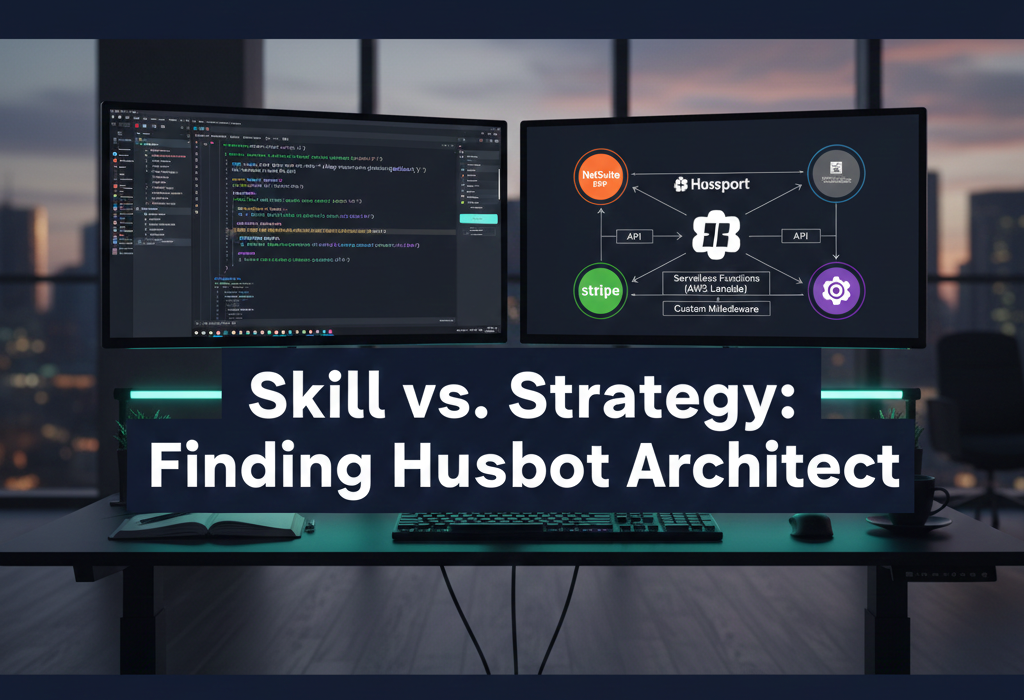
Beyond General Development—The HubSpot Expertise Gap
The conversation starts the same way in boardrooms across mid-market and enterprise companies: “Our HubSpot implementation isn’t delivering what we need.” Marketing operations teams struggle with inflexible workflows. RevOps leaders can’t integrate critical business systems. Development teams hired for “general web development” stare blankly at HubL syntax and HubSpot’s API architecture.
This is the Developer Gap—the chasm between generalized web development skills and the specialized expertise required to architect scalable HubSpot solutions. A talented React developer doesn’t automatically understand HubSpot’s rendering pipeline. A backend engineer proficient in Python may struggle with HubSpot’s serverless execution environment. A WordPress expert faces a completely different paradigm in HubSpot’s CMS architecture.
The challenge intensifies when organizations search for a HubSpot developer for hire. Job postings attract hundreds of applicants claiming HubSpot expertise based on installing marketplace themes or configuring basic workflows. But enterprise-grade HubSpot development demands a rare combination: deep platform-specific technical knowledge, systems architecture thinking, API integration mastery, and strategic business acumen.
Standard web developers fail in the HubSpot ecosystem because they approach it as “just another CMS” or “another API to integrate.” They underestimate the platform’s complexity—its proprietary templating language (HubL), its unique data model with custom objects and associations, its serverless execution constraints, its specific performance optimization requirements, and its enterprise security considerations.
Organizations moving beyond out-of-the-box HubSpot features need developers who understand not just code, but the strategic implications of architectural decisions. The wrong technical choices create years of technical debt. The right architecture unlocks competitive advantages that compound over time. For comprehensive guidance on scaling your tech stack without technical debt, understanding these technical distinctions is essential.
This guide examines the specific technical competencies that separate HubSpot generalists from true platform architects. For CTOs, RevOps managers, and marketing operations directors evaluating candidates, understanding these distinctions prevents costly hiring mistakes and ensures implementations that scale with business growth.
The Core Language—Mastering HubL & HubDB
Why HubL Proficiency Defines Platform Mastery
HubL (HubSpot Markup Language) serves as the foundation of HubSpot CMS development. Superficially similar to Jinja2 or Liquid templating languages, HubL contains HubSpot-specific functions, filters, and architectural patterns that require dedicated expertise. A HubL developer who truly understands the language doesn’t just render data—they architect reusable systems that scale across hundreds of pages and thousands of content variations.
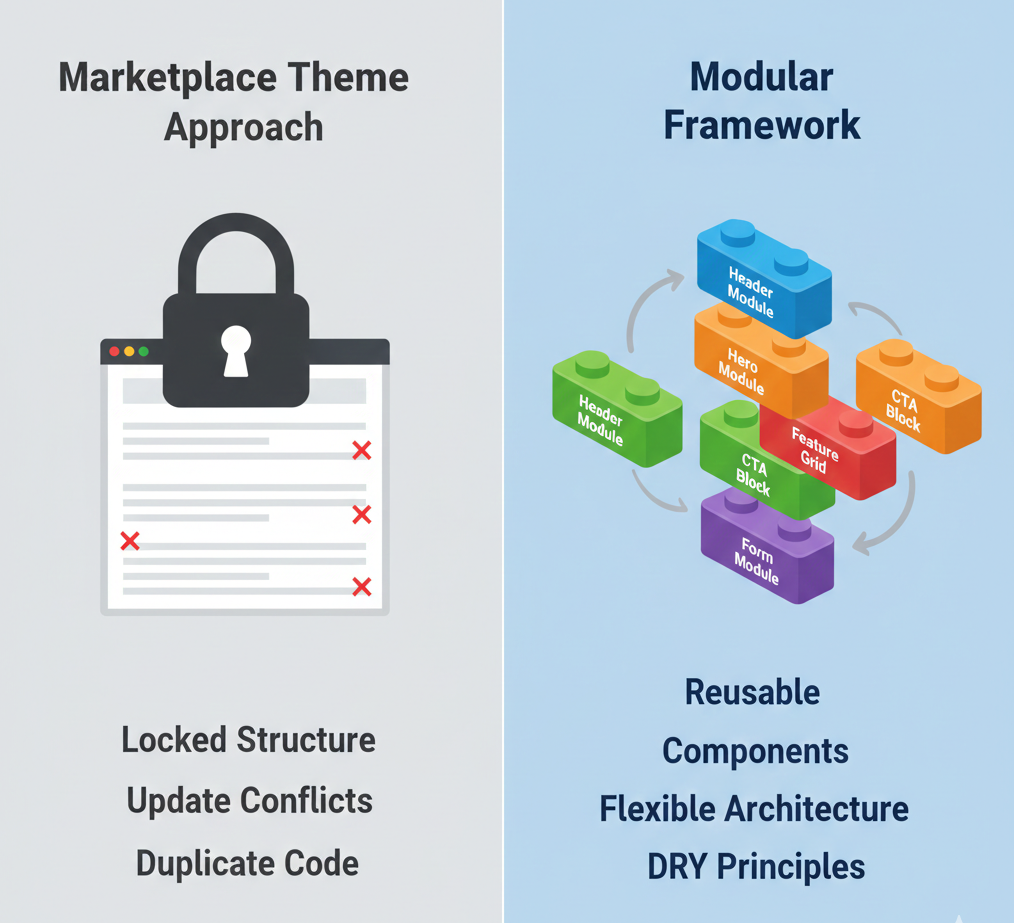
The fundamental distinction: hard-coded templates versus modular development.
Hard-coded templates embed content directly into HTML structure. Each page variation requires duplicate code. Updates cascade into painful find-and-replace operations across multiple files. This approach—common among developers transitioning from traditional web development—creates maintenance nightmares and destroys marketing agility.
Modular development treats every component as a reusable building block. A “Feature Comparison” module contains all necessary HubL logic, CSS, and JavaScript in a self-contained unit. This module can deploy on product pages, landing pages, or blog posts without code duplication. Template inheritance using {% extends %} and {% block %} creates hierarchical structures where base templates define global elements and child templates add page-specific layouts.
Advanced HubL patterns that separate experts from novices:
- Dynamic content generation with complex conditionals: Using nested {% if %} statements with multiple operators to render different layouts based on CRM properties, page context, and user state
- Custom macros for repeatable logic: Creating reusable HubL functions using {% macro %} to standardize complex operations like date formatting, price calculations, or content transformations
- Performance optimization through strategic caching: Understanding when HubSpot caches rendered output and structuring templates to maximize cache efficiency
- Advanced filters and functions: Leveraging HubSpot-specific filters like |selectattr, |groupby, and |map for data transformation without custom JavaScript
HubDB: Data-Driven Content Architecture
HubDB transforms HubSpot CMS from a static content platform into a dynamic application framework. This often-overlooked capability enables developers to create database-driven experiences without external systems. A CMS Hubspot developer proficient in HubDB can build:
- Dynamic resource libraries: Filtering and searching whitepapers, case studies, or documentation based on industry, topic, or content type—all managed through HubDB tables that marketing teams update without developer involvement
- Multi-location finders: Interactive maps pulling location data, hours, services, and contact information from HubDB, with client-side filtering and geolocation integration
- Product catalogs: Displaying inventory with specifications, pricing tiers, and availability status synchronized from external systems via API into HubDB tables
- Event calendars: Managing webinars, conferences, or training sessions with registration links, speaker information, and real-time availability
Technical implementation pattern:
{% set locations_table = hubdb_table_rows(1234567, "location_type=retail&state=CA") %}
{% for location in locations_table %}
  <div class="location-card" data-lat="{{ location.latitude }}" data-lng="{{ location.longitude }}">
    <h3>{{ location.name }}</h3>
    <p>{{ location.address }}, {{ location.city }}</p>
  </div>
{% endfor %}
Expert HubL developers understand HubDB’s query limitations, performance characteristics, and when it’s appropriate versus when external databases are necessary. They architect solutions that balance marketing team autonomy with technical sustainability. Developers should demonstrate proficiency with HubSpot’s official developer documentation and stay current with platform updates.
Integration Mastery—Beyond the Marketplace
The Private Apps and OAuth Architecture
When evaluating a custom HubSpot API developer, the critical distinction lies in their understanding of authentication architecture and its security implications. Marketplace integrations handle authentication automatically, shielding developers from complexity. Custom integrations demand deep knowledge of OAuth 2.0 flows, token management, scope limitations, and security best practices.
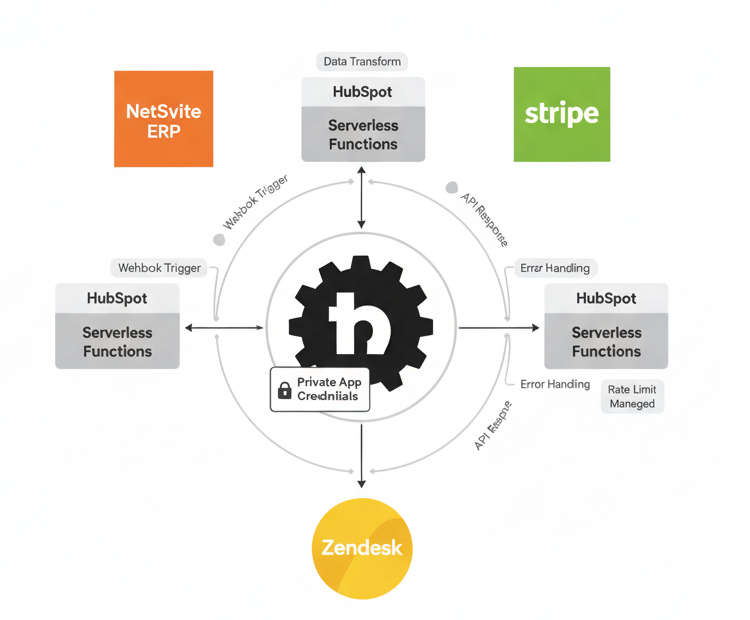
Private Apps provide scoped, server-side API access without user authentication flows. Expert developers understand when Private Apps are appropriate (internal automations, trusted environments, server-to-server communication) versus when OAuth is required (user-specific actions, third-party applications, customer-facing tools).
Advanced authentication competencies:
- Scope minimization: Requesting only necessary permissions rather than broad “admin” access, following principle of least privilege
- Secure credential storage: Never hardcoding API keys; using environment variables, secrets managers (AWS Secrets Manager, HashiCorp Vault), or secure key storage services
- Token refresh handling: Implementing proper OAuth refresh token logic to maintain persistent connections without user re-authentication
- Rate limit awareness: Understanding HubSpot’s tiered rate limits (100 requests per 10 seconds for most endpoints) and architecting accordingly
Serverless Functions: The Middleware Layer
The emergence of HubSpot serverless functions fundamentally changed what’s possible within the platform. Developers who master this capability transform HubSpot from a marketing tool into a comprehensive application platform.
HubSpot serverless functions execute Node.js code in HubSpot’s infrastructure, enabling custom business logic without maintaining separate servers. This middleware layer handles:
- Complex data transformations: Converting external API responses into HubSpot’s data structure before creating or updating records
- Business rule enforcement: Validating data against company-specific requirements before allowing updates
- Multi-step orchestration: Coordinating actions across multiple systems—update HubSpot, notify Slack, create Jira ticket, log to analytics platform—all from a single trigger
- Real-time processing: Responding to webhooks from external systems with sub-second latency
Problem/Solution: API Rate Limit Management
Inexperienced developers create rate limit chaos. They loop through 5,000 contacts, making individual API calls for each update. They trigger webhooks that fire hundreds of simultaneous requests. They poll external APIs every minute instead of using event-driven architecture.
Expert developers prevent rate limit violations through:
- Batch operations: Using HubSpot’s batch endpoints to update up to 100 records in a single API call, reducing 5,000 calls to 50
- Asynchronous processing: Queuing large operations and processing them with controlled concurrency
- Exponential backoff: Detecting rate limit responses (429 status codes) and implementing intelligent retry logic with increasing delays
- Caching strategies: Storing frequently accessed data temporarily to reduce redundant API calls
Code example demonstrating batch processing:
javascript
// Inefficient approach - 1000 API calls
for (const contact of contacts) {
  await hubspotClient.crm.contacts.basicApi.update(contact.id, properties);
}
// Expert approach - 10 API calls
const batches = chunkArray(contacts, 100);
for (const batch of batches) {
  await hubspotClient.crm.contacts.batchApi.update({ inputs: batch });
}
Evaluating a developer’s integration expertise requires examining their architectural thinking, not just their ability to make API calls work. For context on complex integration patterns, reviewing approaches to integrating HubSpot with Webflow or connecting Wix to HubSpot reveals the sophistication required.
CRM Customization & Data Architecture
Designing Custom Objects and Association Labels
A HubSpot technical architect distinguishes themselves through data modeling expertise. While junior developers focus on making features work, architects design systems that remain maintainable and scalable through years of business evolution.
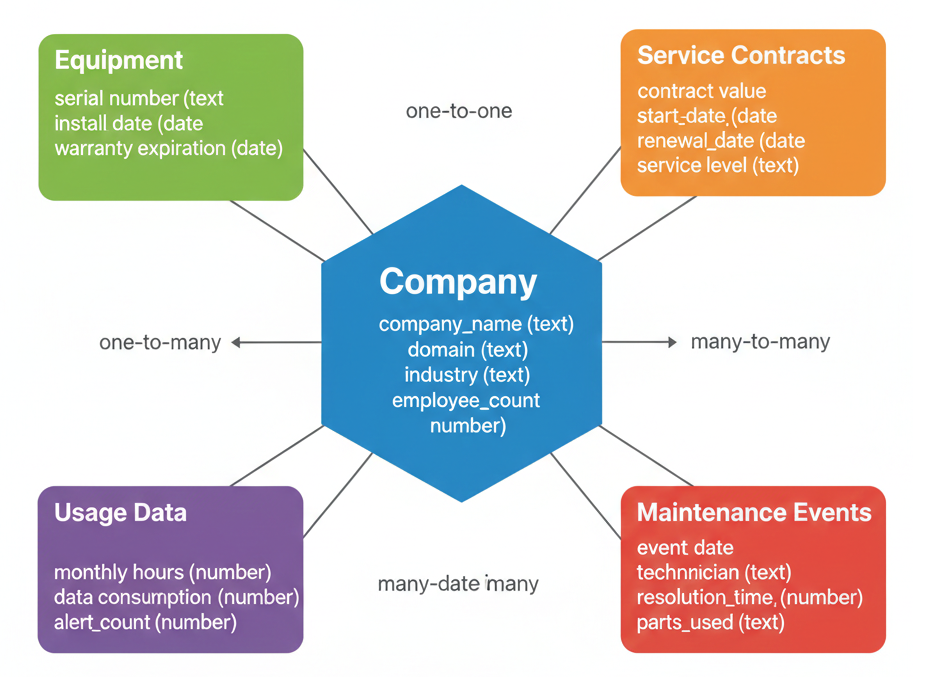
Custom objects enable true relational data models within HubSpot’s CRM. But poorly designed object schemas create “data debt”—technical obligations that compound over time, eventually requiring expensive refactoring or constraining business operations.
Database design principles for HubSpot CRM:
- Normalization versus denormalization trade-offs: Understanding when to split data into separate objects (avoiding duplication) versus when to duplicate for performance (reducing complex joins)
- Association cardinality planning: Designing one-to-many, many-to-many, or parent-child relationships that accurately reflect business processes
- Property naming conventions: Establishing systematic naming that enables long-term maintenance—prefixes for object types, clear data type indicators, consistent terminology
- Future-state modeling: Architecting objects that accommodate known future requirements without over-engineering for hypothetical scenarios
Why database design skills prevent data debt:
Data debt manifests when organizations outgrow their initial CRM structure. Marketing needs new segmentation that existing properties don’t support. Sales requires tracking relationships that the association model can’t handle. Reporting demands cross-object analysis that becomes impossibly complex.
Skilled architects prevent this by:
- Interviewing stakeholders across functions to understand current and anticipated data requirements
- Mapping business processes to identify entities, relationships, and data flows before designing objects
- Building flexibility through modular object design that allows incremental expansion
- Documenting decisions with clear rationale for future developers who inherit the system
Example: Subscription business architecture
A SaaS company needs to track multiple product subscriptions per customer, each with independent billing, usage metrics, and renewal dates. An inexperienced developer creates 47 properties on the Deal object, leading to data chaos. An architect designs:
- Custom “Subscription” object: Properties for MRR, renewal date, product tier, health score, provisioning status
- Custom “Product Instance” object: Technical details—instance ID, server location, version, usage data
- Association labels: “Subscription” to “Company” (many-to-one: “has active subscription”), “Subscription” to “Product Instance” (one-to-one: “provisioned instance”)
- Calculated properties: Workflow-maintained fields like “Total MRR” on Company aggregating all subscription values
This architecture scales to thousands of subscriptions, enables sophisticated reporting, and accommodates business model changes without structural overhaul. Understanding how HubSpot’s CRM works provides essential context for these architectural decisions.
Performance, SEO, and the CLI
Command Line Interface Mastery
The HubSpot CLI (Command Line Interface) separates professional developers from those who rely solely on the Design Manager UI. Developers proficient with the CLI demonstrate:
- Local development workflows: Building and testing HubSpot modules, templates, and serverless functions locally before deployment, enabling rapid iteration and debugging
- Version control integration: Managing HubSpot code in Git repositories with proper branching strategies, code review processes, and deployment pipelines
- Automated deployment: Creating CI/CD pipelines that deploy HubSpot assets automatically on merge, reducing human error and deployment time
- Theme structure understanding: Organizing assets following HubSpot’s theme architecture patterns for maximum reusability and maintainability
CLI workflow example:
bash
# Clone existing HubSpot theme locally
hs fetch --portal=12345 src/themes/custom-theme
# Create new module with CLI
hs create module feature-comparison
# Watch for changes and sync automatically
hs watch src/themes/custom-theme --portal=12345
# Deploy to production
hs upload src/themes/custom-theme custom-theme --portal=67890
Developers using only Design Manager face limitations: no version history, difficult collaboration, manual deployments, limited testing capabilities. CLI-proficient developers operate at enterprise velocity with professional engineering practices following professional version control with Git.
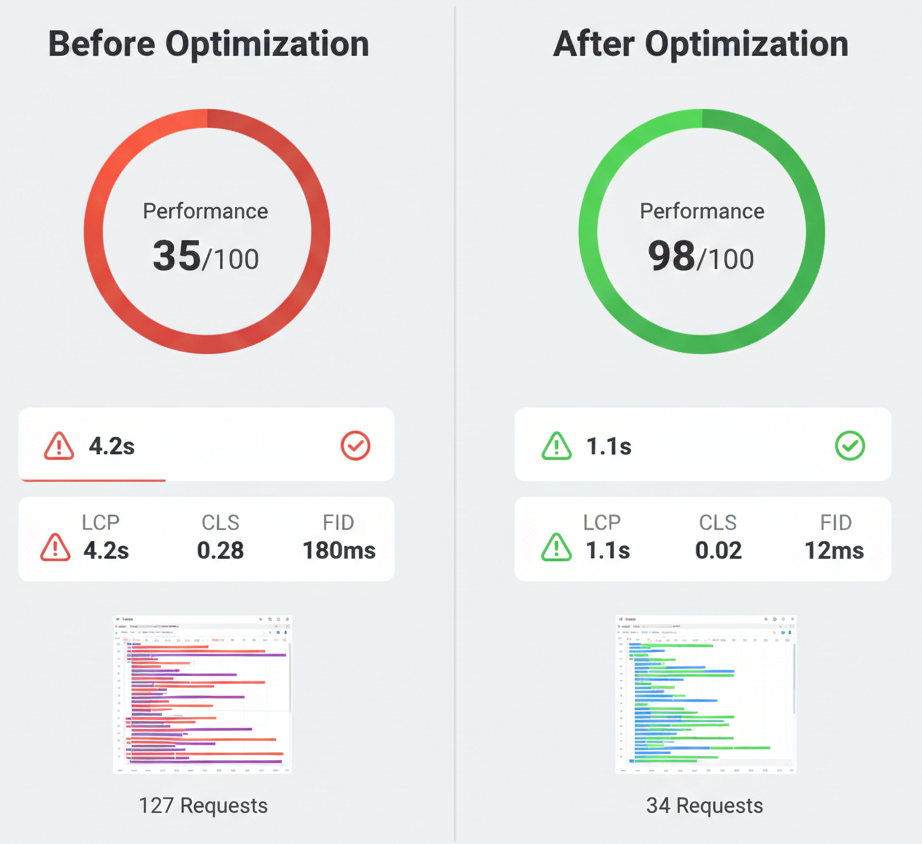
Core Web Vitals Optimization for HubSpot’s CDN
Performance optimization in HubSpot requires platform-specific knowledge. Generic web performance advice often doesn’t apply to HubSpot’s architecture—its CDN configuration, asset delivery patterns, and rendering pipeline.
HubSpot-specific optimization techniques:
Lazy loading HubSpot modules: Implementing intersection observers to defer JavaScript initialization for below-the-fold modules
HubL template optimization: Minimizing database queries in templates by caching results and avoiding redundant HubDB calls
Critical CSS extraction: Identifying above-the-fold styles and inlining them while deferring remaining CSS
JavaScript bundle management: Using HubSpot’s module JS fields to scope dependencies, avoiding global libraries loaded on every page
Image optimization: Leveraging HubSpot’s automatic image resizing with proper srcset and sizes attributes for responsive delivery
Core Web Vitals specific to HubSpot:
- Largest Contentful Paint (LCP): Optimizing hero images, reducing render-blocking resources, implementing resource hints (preconnect, preload)
- Cumulative Layout Shift (CLS): Setting explicit dimensions on images and embeds, avoiding dynamic content injection above the fold
- First Input Delay (FID): Minimizing JavaScript execution time, deferring non-critical scripts, using web workers for heavy computation
Expert developers understand how HubSpot’s CDN caches assets, how the rendering pipeline processes HubL, and how to optimize within these constraints following Google’s Core Web Vitals standards. For platform comparisons that inform architectural decisions, examining HubSpot versus WordPress provides valuable context.
The Vetting Checklist—Interview Questions That Reveal Expertise
When interviewing a HubSpot developer for hire, standard technical interviews fall short. Candidates can memorize HubL syntax or claim API experience without demonstrating architectural thinking. These questions probe depth of understanding:
5 Killer Interview Questions for HubSpot Developers
1. “Explain how you would architect a bi-directional sync between HubSpot and an ERP system where both systems can be the source of truth for different data points. How would you handle conflict resolution?”
What this reveals: Understanding of event-driven architecture, data consistency challenges, idempotency, and business logic complexity. Weak candidates suggest simple polling. Strong candidates discuss webhooks, conflict resolution strategies, field-level sync rules, and audit logging.
2. “Walk me through your approach to optimizing a HubSpot CMS page currently scoring 42/100 on PageSpeed Insights. What’s your diagnostic process?”
What this reveals: Systematic debugging methodology, understanding of performance fundamentals, and HubSpot-specific optimization techniques. Strong candidates mention waterfall analysis, render-blocking resource identification, HubL template review, and Core Web Vitals specifics.
3. “How would you design a custom object architecture for a multi-tenant SaaS platform where each customer has multiple users, multiple product instances, and multiple billing accounts?”
What this reveals: Data modeling expertise, understanding of HubSpot’s association capabilities and limitations, and ability to map complex business logic to CRM structure. Look for discussion of normalization, association labels, and scalability considerations.
4. “Describe the trade-offs between implementing custom functionality as a HubSpot serverless function versus an external webhook endpoint. When would you choose each?”
What this reveals: Architectural decision-making, understanding of serverless constraints (execution time, memory limits, cold starts), and security considerations. Strong candidates discuss latency requirements, complexity, maintainability, and total cost of ownership.
5. “You’re hitting HubSpot’s API rate limit during a nightly sync job. Walk me through your debugging and optimization process.”
What this reveals: Problem-solving methodology, understanding of rate limits and batch operations, and optimization thinking. Strong candidates discuss request logging, batch endpoints, queue-based processing, and exponential backoff strategies.
Candidates who answer these questions with specific technical details, discuss trade-offs, and reference past implementations demonstrate genuine expertise versus surface-level familiarity.
Conclusion: The Hybrid Developer-Strategist
The right HubSpot developer for hire transcends pure coding ability. Technical proficiency in HubL, API integration, and CRM architecture provides the foundation, but strategic business thinking separates platform experts from code implementers.
Elite HubSpot developers function as technical architects—they understand business processes, anticipate scaling challenges, design for future adaptability, and communicate technical trade-offs in business terms. They ask clarifying questions about business goals before proposing technical solutions. They identify potential complications before they become expensive problems. They frame recommendations in ROI rather than features.
Organizations hiring HubSpot developers often make the mistake of evaluating candidates solely on technical checklist criteria. The developer who scores perfectly on HubL syntax questions but can’t articulate why custom objects might be preferable to custom properties for a specific use case lacks the strategic dimension that drives successful implementations.
The comprehensive skill profile combines:
- Deep technical expertise: HubL mastery, API architecture, serverless development, data modeling, performance optimization
- Platform knowledge: Understanding HubSpot’s product roadmap, best practices, certification programs, and ecosystem
- Business acumen: Translating technical capabilities into business outcomes, understanding ROI, communicating with non-technical stakeholders
- Professional practices: Version control, documentation, testing protocols, code review, and deployment processes
For organizations choosing between building internal capabilities or partnering externally, exploring options to engage a specialized HubSpot development company provides strategic context.
Ready to Find Your HubSpot Technical Architect?
A2Z Dev Center specializes in connecting organizations with elite HubSpot developers who combine deep technical expertise with strategic business thinking. Our comprehensive vetting process evaluates candidates across technical proficiency, architectural design, business acumen, and communication effectiveness.
Our services include:
- Technical HubSpot Audit: Comprehensive analysis of current implementation, identifying optimization opportunities and architectural gaps
- Developer Placement: Matching organizations with vetted HubSpot developers who meet specific technical and cultural requirements
- Custom Development: Building enterprise-grade HubSpot solutions with our team of certified architects and developers
- Training & Enablement: Upskilling internal teams on advanced HubSpot development practices and architectural patterns
Find developers who build architecture, not just features.
Frequently Asked Questions


Ready to Get Started?
Your Details will be Kept confidential. Required fields are marked *


